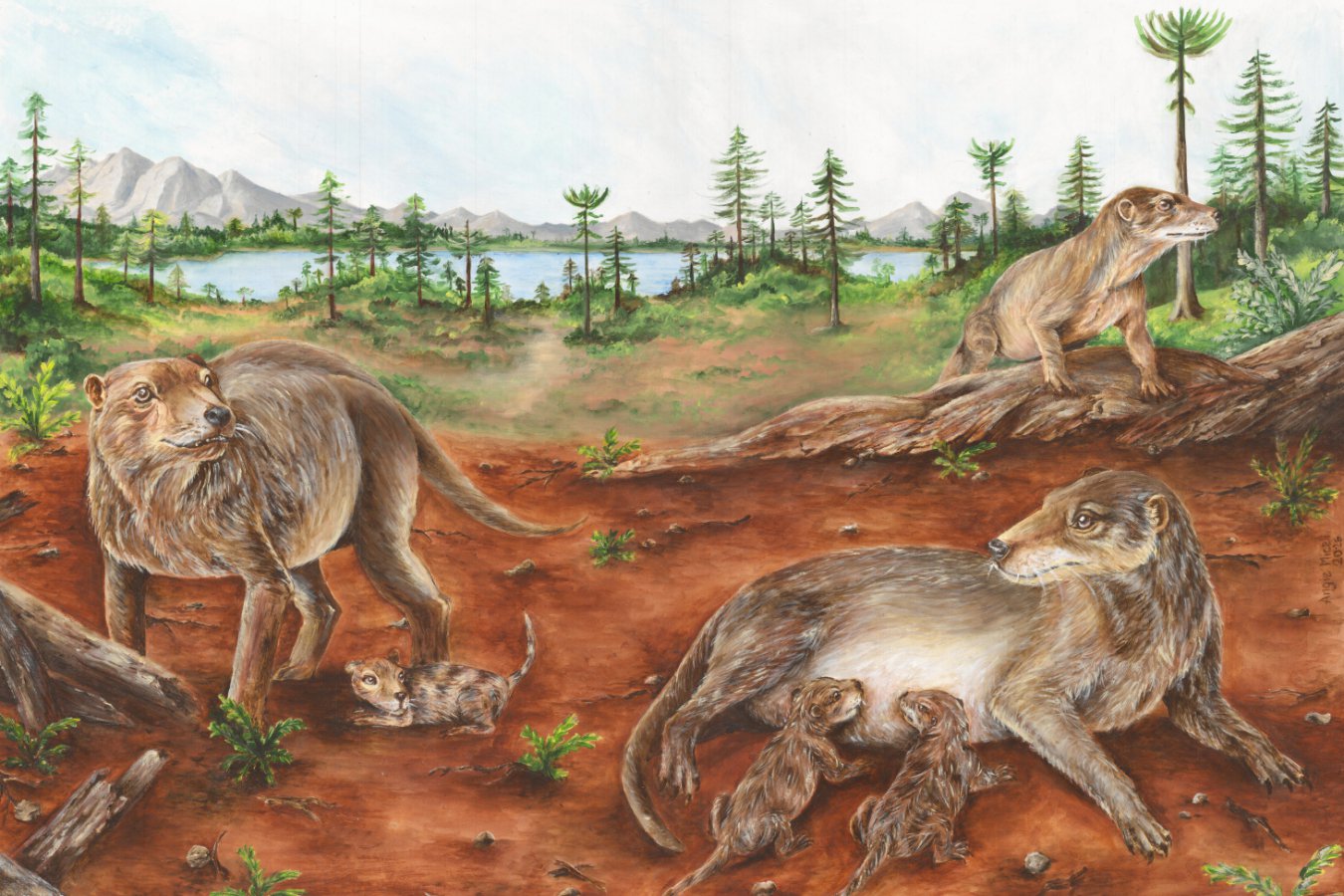
MALE: A recent study has revealed that the ancient ancestors of mammals, known as cynodonts, may have been giving birth to live young over 236 million years ago. This discovery was made by examining fossils of Chiniquodon theotonicus found in Talampaya National Park, Argentina, challenging previous assumptions that these creatures laid eggs like reptiles. The debate over whether early mammalian ancestors laid eggs or were viviparous has long puzzled scientists. Cynodonts, which emerged around 260 million years ago, are considered direct ancestors of modern mammals.
The analysis of a fossil's growth lines, akin to tree rings, provided insights into the life stages of Chiniquodon theotonicus, suggesting similarities with placental mammals. "Further, as they argue, the apparent absence or rarity of actual eggs of any kind in the Permian and Triassic has always been puzzling – the so-called amniote egg gap," Mike said. The implications of this discovery could significantly alter our understanding of mammalian evolution, suggesting that traits like viviparity were present much earlier than previously thought. Future research may focus on further fossil evidence to confirm these findings and provide a clearer picture of how early mammalian reproductive strategies evolved.
Image credit: NEW SCIENTIST